Enhancing Sickle Cell Care With Continuous Clinical Insights
Sickle cell disease demands continuous attention. Unlike conditions that present episodically and resolve cleanly between events, sickle cell disease is a lifelong condition in which the underlying pathophysiology is always present, even when symptoms are not. Managing it well requires not just responding to crises but understanding the ongoing state of a patient's health between those events.
Continuous clinical insights — enabled by remote monitoring technology — are beginning to make this possible in ways that were not available a decade ago.
The Limits of Episodic Care
Conventional outpatient care for sickle cell disease is typically structured around scheduled appointments — often monthly or quarterly — supplemented by emergency presentations when crises occur. Between these touchpoints, clinicians have limited visibility into how patients are faring. A patient who attends a routine appointment feeling well may have experienced several near-crisis episodes in the weeks prior. Without continuous data, these events go unrecorded and unaddressed.
This episodic model also places significant demands on patients. Accurately recalling symptoms, triggers, and health fluctuations over a period of weeks is difficult. Important information is lost. Patterns that might be visible across multiple data points remain invisible when reconstructed from memory.
What Continuous Monitoring Adds
Remote monitoring platforms that collect biometric data continuously provide clinicians with something that has previously been difficult to obtain: an objective record of a patient's health across time. This record captures the variability that is characteristic of sickle cell disease — the good days and the difficult ones, the patterns that precede deterioration and those that follow recovery.
With access to this data, clinicians can track disease progression more accurately. They can identify periods of increased physiological stress before those periods become clinical emergencies. They can assess the effectiveness of current management strategies by examining whether biometric patterns improve following treatment adjustments. And they can identify patients who are at elevated risk at any given moment, allowing care to be prioritised accordingly.
Risk Stratification in Practice
One of the most valuable applications of continuous monitoring data is risk stratification. By analysing trends across multiple biometric parameters — heart rate variability, oxygen saturation, temperature, and activity — monitoring platforms can flag patients whose physiological state is moving toward a higher-risk profile. This information allows clinical teams to intervene proactively rather than reactively.
For clinical teams managing large patient panels, this capability is particularly significant. It is not always possible to provide the same level of attention to every patient simultaneously. Risk stratification tools allow teams to focus intensive monitoring and early intervention on the patients who need it most, at the time they need it.
The goal of continuous clinical insights is not to generate an overwhelming volume of data. It is to surface the information that matters — at the right time, in a format that supports clinical decision-making. When that goal is achieved, continuous monitoring becomes not an additional burden for clinicians but a genuine enhancement to the care they are already committed to providing.
Related Article

Interpreting Sickle Cell Data for Better Clinical Decisions
This research helps doctors translate patient-generated and clinical data into actionable insights, improving diagnosis accuracy, and monitoring disease progression.
Continue Reading →
Improving Patient Outcomes Through Data-Driven Sickle Cell Management
This study explores how integrating real-world patient data with clinical practice can help physicians anticipate complications earlier and personalize treatment plans.
Continue Reading →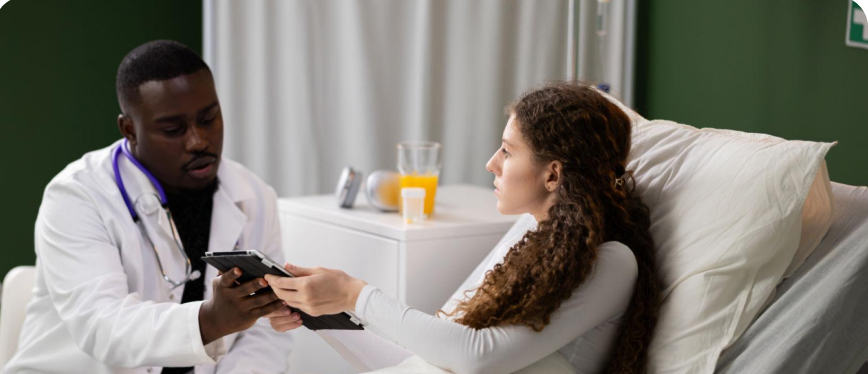
From fear to data — how STATRA changed how Fatima manages her sickle cell.
What once felt like uncertainty and constant worry has become clarity and control — STATRA helps Fatima track her health parameters and stay ahead of every crisis.
Continue Reading →